How UV Protection in Tints Impacts Your Health
How UV Protection in Tints Impacts Your Health
Table of Contents
- Introduction
- 1. Understanding UVA and UVB Rays and Health Impacts
- 2. How Window Tinting Works to Block UV
- 3. The Health Benefits of UV-Blocking Window Tint
- 4. Popular Tint Technologies and Their UV Performance
- 5. How to Choose a UV-Blocking Tint for Health
- 6. Practical Tips for Daily Protection
- FAQ
- Conclusion
Introduction
Why this topic matters for health
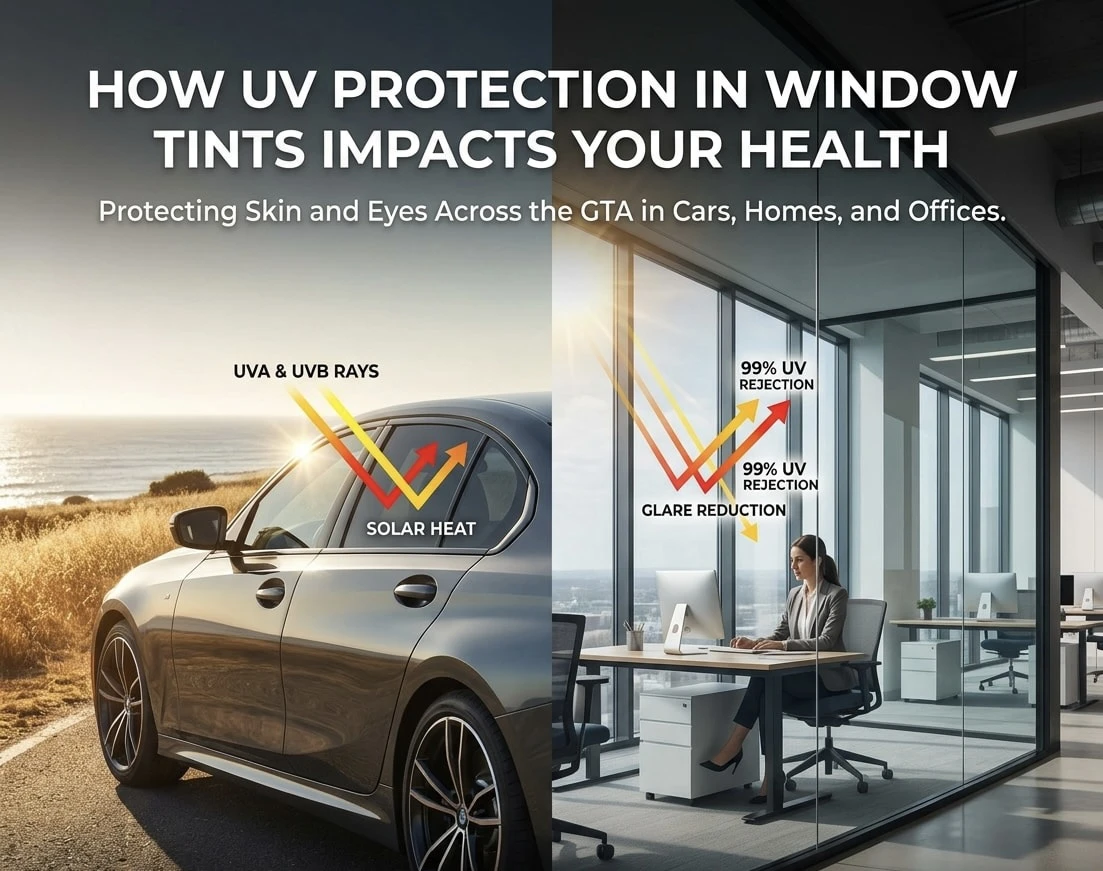
UV exposure affects skin and eyes over time. In Ontario, long drives, office days, and large windowed spaces increase daily contact with ultraviolet rays. High-quality UV window film can reduce this exposure, supporting healthier skin and reducing glare that strains the eyes.
Our approach focuses on films that block UVA and UVB rays while conforming to Ontario regulations. This helps protect you during commutes in the GTA and when inside homes or businesses with expansive glazing.
Overview of UV exposure indoors and in vehicles
UV rays can enter through glass, contributing to indoor sun damage even when you’re not outdoors. This indoor UV exposure poses significant health risks over time, as it relates to premature skin aging and an increased risk of skin cancer, making awareness of UV levels indoors just as important as when you’re outside.
In vehicles, the sun’s UV radiation travels through front and side windows. Tint films with strong UV rejection reduce daily exposure during commutes across Brampton, Mississauga, and Toronto neighborhoods. This is especially important for drivers who spend extended periods behind the wheel.
- Daily driver safety: UV protection during long GTA drives
- Indoor protection: skin and eye health in homes and offices
- Regulatory alignment: front side windows at or below 30% VLT for automotive use
1. Understanding UVA and UVB Rays and Health Impacts
What UVA and UVB rays are
UVA and UVB are two components of ultraviolet radiation from the sun. UVA travels deeper into the skin and contributes to aging over time, while UVB primarily affects the skin's surface and drives sunburn. Both play a role in cumulative skin damage. Guidelines regarding the balance of vitamin D synthesis versus UV exposure suggest that while moderate sun exposure is essential for vitamin D production, excessive UV exposure can lead to long-term skin issues. Achieving the right balance is crucial for skin health and overall well-being.
How each type affects skin and eyes
- Reducing daily UVA exposure helps slow these signs of premature aging, including wrinkles and pigment changes.
- UVB exposure increases sunburn risk and, with repeated contact, can elevate skin cancer risk. Protection helps prevent acute damage after outdoor activity.
- Eye health is influenced by UV exposure. Glare and UV light can strain vision, making lens tinting a practical option for drivers and indoor workers alike.
2. How Window Tinting Works to Block UV
Basics of UV filtration in films
Window films are thin layers applied to glass engineered to absorb or reflect UV radiation before it reaches occupants. High-quality ceramic and carbon films target UVA and UVB rays while remaining transparent enough for visibility. These films help maintain clear sightlines while delivering UV protection for skin and eyes.
During manufacturing, filters within the film are tuned to block the majority of UV energy. This reduces the amount that passes through the glass without creating excessive tint that would violate local VLT limits.
Difference between glass filtration and tint performance
Plain glass offers minimal blocking of UVA and UVB rays, especially for longer indoor exposure. Tint performance combines filtration with heat rejection and glare control. The result is a measurable reduction in UV transmission behind windows in vehicles, homes, or offices.
Key distinctions include:
- Glass filtration depends on the glass composition and any coatings already present.
- Tint performance reflects the film’s UV rejection capability, which is independent of the underlying glass.
- Quality films maintain UV blocking while meeting Ontario regulations for VLT on automotive applications.
3. The Health Benefits of UV-Blocking Window Tint
Prevention of premature skin aging
UV-blocking window tint effectively reduces cumulative exposure to UVA and UVB rays that contribute to skin aging. By filtering harmful light during daily commutes and while inside buildings, you help preserve an even skin tone and significantly minimize the appearance of fine lines over time, thus aiding in the reduction of skin aging through controlled UV exposure.
This protection works alongside your skin's natural defenses, helping limit daily photoaging that occurs behind car windows and beside large glazed spaces in the GTA.
Reduction of skin cancer risk
Blocking a high percentage of UV radiation lowers the energy reaching skin cells. Consistent protection during long drives and indoor stays supports long-term risk reduction when combined with other sun-safe practices.
UV window film complements sunscreen and protective habits for a comprehensive approach to sun safety in Ontario.
Eye protection considerations
Glare control reduces eye strain during extended periods behind the wheel or near bright windows. Clear or lightly tinted options maintain visibility while delivering UV rejection, aiding safer daily routines in Brampton, Mississauga, and Toronto.
Beyond UV blocking, the tint helps minimize indoor glare that can affect concentration in offices and homes across the GTA.
4. Popular Tint Technologies and Their UV Performance
Ceramic
Ceramic films use nonconductive particles that absorb UV radiation without adding metallic reflectivity. They typically maintain clear visibility while delivering strong UV rejection, making them a practical choice for daily drivers, homes near large windows, and office spaces in the GTA.
Carbon
Carbon-based films leverage microscopic carbon particles to reduce UV transmission and heat gain. They offer deeper shading than some clear options while keeping interior brightness usable, which helps with long drives and daylight work sessions without gridlock glare.
Dual-Reflective
Dual-reflective films combine a reflective outer layer with a clear inner layer. This setup enhances daytime privacy and UV blocking, though the reflective quality can influence how they appear from the outside in certain lighting conditions.
Claims to UVA/UVB protection and real-world effectiveness
High-quality ceramic and carbon films are designed to block up to 99% of harmful UV rays, contributing to skin protection for occupants. Real-world effectiveness depends on film specifications, installation quality, and adherence to Ontario VLT rules for automotive use. The practical outcome is reduced UV exposure during long GTA commutes and when working near sun-facing windows.
TechnologyUV Blocking ClaimTypical VisibilityNotesCeramicHigh UV rejectionClear to lightly tintedNonconductive, minimal glare impactCarbonStrong UV rejectionModerate tintGood heat reductionDual-ReflectiveUV blocking with added privacyVariable, often darkerOutside appearance can be reflective
5. How to Choose a UV-Blocking Tint for Health
Choosing the right tint is about verified performance, not marketing claims. Look for films that explicitly state UV rejection for both UVA and UVB rays. This ensures comprehensive skin protection during long drives and daily indoor exposure near large windows.
What to look for on technical specs
Review the film’s UV performance ratings and how they translate to real world use. Prioritize ceramics and carbon options known for strong UV blocking without compromising visibility. Check the documented reduction in UV transmission and confirm a match with Ontario VLT limits for front side windows.
- UV rejection percentages for UVA and UVB
- Visible light transmission (VLT) aligned to Ontario rules
- Heat rejection performance under typical GTA conditions
- Nonconductive properties for electrical safety and ease of installation
Importance of third-party testing and certifications
Independent testing provides assurance beyond manufacturer claims. Seek films with certifications or seals from dermatology or safety organizations. Third-party validation helps verify long term UV protection and consistency across temperature ranges.
AspectWhat to VerifyWhy it MattersUV rejectionUVA and UVB coverage citedDirect impact on skin and eye protectionVLT complianceMeets Ontario automotive limitsLegal and practical visibilityIndependent testingThird-party certificationsIndependent performance verification
6. Practical Tips for Daily Protection
Indoor sun exposure strategies
Maximize natural light while reducing UV exposure indoors. Place workstations away from direct sun and apply UV-blocking window films on large panes. Use simple shading during peak sun hours to lower eye strain and skin contact with harsh rays.
- Close drapes or blinds during the sun’s peak hours 10:00 to 16:00 in the GTA
- Apply UV-blocking films on south and west facing windows in homes and offices
- Reassess interior layouts to keep seating out of direct glare zones
Car usage and sun exposure patterns
Daily driving exposes skin to UV through vehicle glass. A quality UV-blocking tint reduces cumulative exposure during commutes and errands. Front side windows should meet Ontario limits while still providing clear visibility.
- Use UV window film tuned for UVA and UVB rejection
- Adjust driving times when possible to minimize exposure during peak sun
- Wear sunglasses with proper UV protection during trips
Complementary protection (sunscreen, eyewear)
Window tint is part of a broader protection plan. Pair it with skin and eye care for comprehensive coverage.
- Apply SPF 30 or higher sunscreen to exposed areas during long exposures
- Choose wraparound or UV-blocking sunglasses to shield eyes
- Practice sun safety near large windows during extended periods
FAQ
Below are common questions about UV protection in window tints and how it relates to health in the GTA area. Each answer stays grounded in practical, real-world use for drivers, homeowners, and office workers.
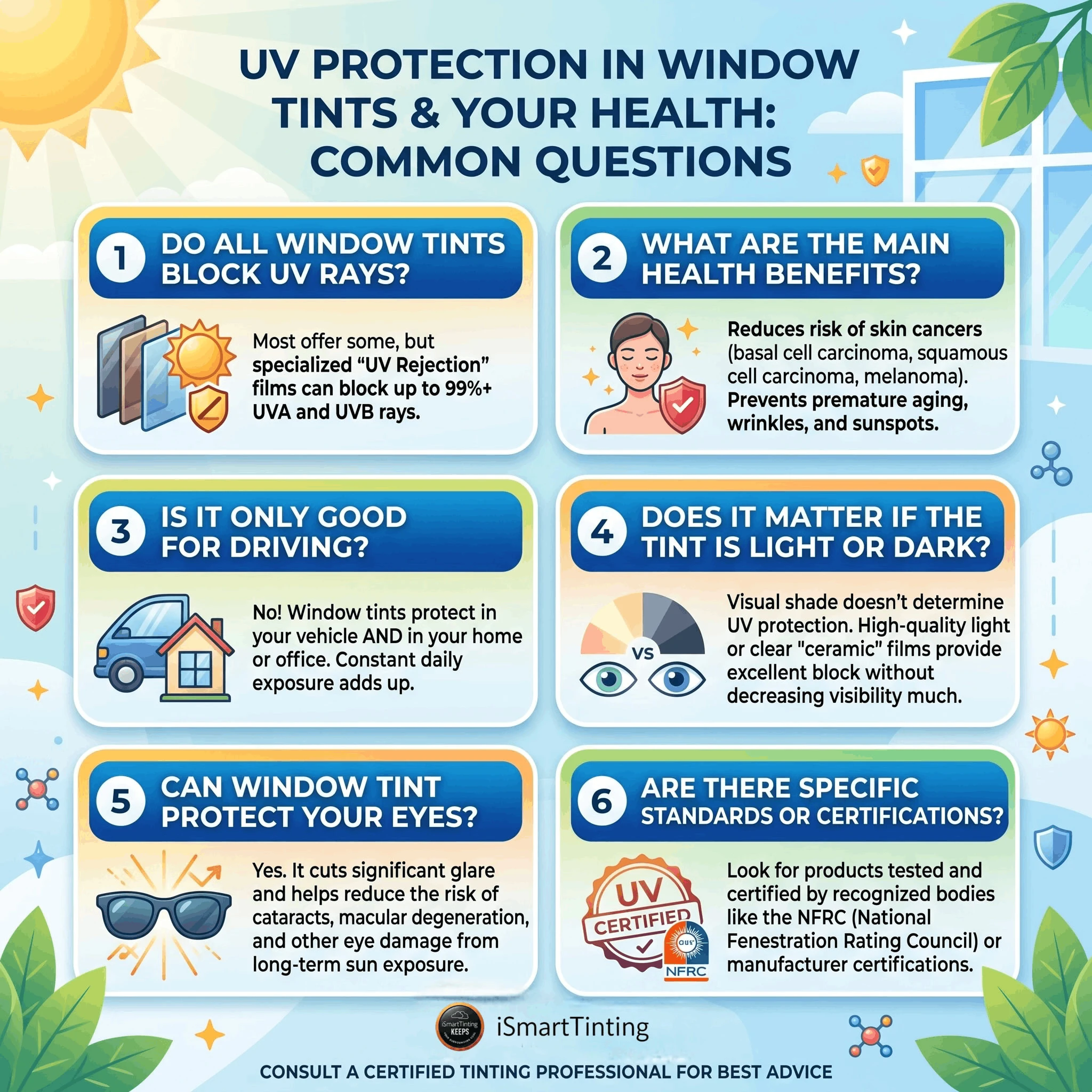
- Do all window tints block UV rays completely? Not all films are equal. Look for UV rejection specifications that cover both UVA and UVB rays to ensure comprehensive protection.
- Can window film interfere with visibility? High quality ceramic or carbon films are designed for strong UV blocking while maintaining clear or lightly tinted views, meeting Ontario VLT limits for front side windows.
- Will tinting reduce indoor sun damage near large windows? Yes, by lowering UV transmission, tinting can reduce skin exposure during long periods near sunlit panes in homes and offices.
- Is third party testing important? Independent testing helps confirm real-world UV performance across temperature ranges, not just manufacturer claims.
- Should I still use sunscreen when driving or indoors? Window tint provides additional protection but is not a substitute for sunscreen on skin regularly exposed to sun.
QuestionKey PointTakeawayUV blocking claimsVerify UVA and UVB coverageChoose films with explicit full-spectrum UV rejectionVisibility and tint levelOntario front side window requirements applyMaintain required visibility while gaining protectionIndependent validationThird-party certifications matterLook for seals or documented tests
Conclusion
UV protection in window tint is a practical aspect of daily health for drivers, homeowners, and office workers across the GTA. Choose high quality films that explicitly reject UVA and UVB to support skin and eye comfort during commutes and indoor tasks.
The goal is to pair UV filtration with everyday practicality. A tint that maintains visibility while reducing UV exposure helps you stay compliant with Ontario rules and reduces glare and heat in cars and buildings alike.
Key takeaways to consider as you plan a tint upgrade:
- Look for explicit UVA and UVB rejection to ensure comprehensive protection
- Confirm the tint aligns with front side window VLT requirements for legal visibility
- Prioritize independent testing or third party certifications to verify performance
References
- UV Window Film & Tint
- does tinted windows stop uv ray and stuff like sunscreen?
- Why can't we tint windscreen? most risk of sun cancer
- UV radiation: Tinted windows fact sheet
- The Science Behind UV Protection with Home Window ...
Ready to Upgrade Your Vehicle, Home, or Office?
Get premium heat rejection, 99% UV protection, and custom privacy across the GTA.