Window Tint Film: Home & Office Guide | iSmartTinting
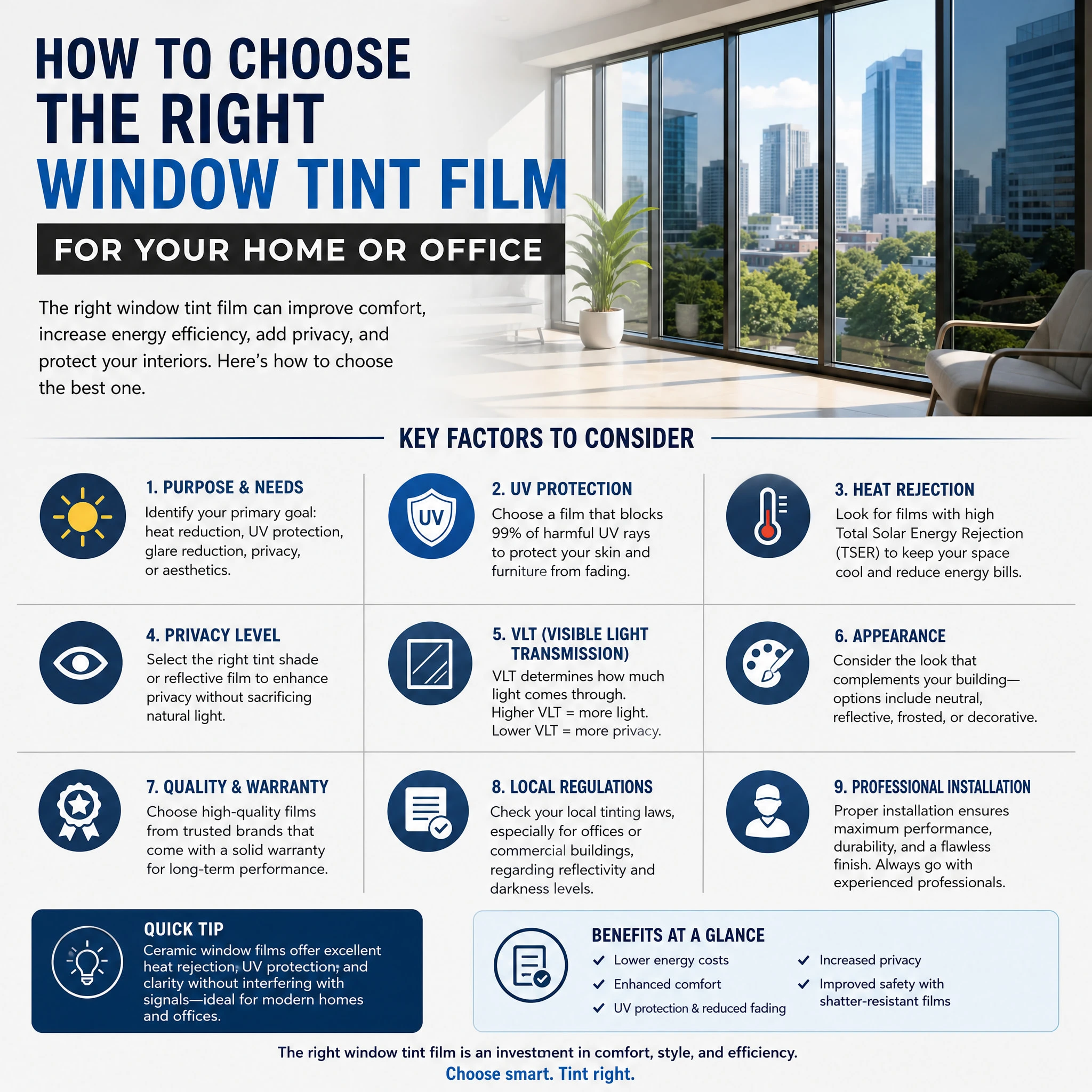
How to Choose the Right Window Tint Film for Your Home or Office
Picking the right window tint film for your home or office is not as simple as grabbing the cheapest option you find online. The type of film you choose directly affects how much heat stays out, how much privacy you get, and how long the film actually lasts. For homeowners and office managers across the Greater Toronto Area, making the wrong call can mean wasted money, peeling film, and windows that still let in too much glare. This guide walks you through everything you need to know about window tint film for home and office use so you can make a confident, informed decision.
Why the Type of Window Tint Film You Choose Matters
Not all window films are built the same, and choosing the wrong type can create more problems than it solves. A film that works well for a south-facing sunroom may be completely wrong for a glass-partitioned office boardroom. Poor film choices often result in bubbling over time, heat that never quite goes away, or privacy that only works from certain angles.
The film type you select determines everything from how much solar energy gets rejected to whether your Wi-Fi signal stays strong. Some films block heat while staying nearly invisible. Others create a mirror-like finish that doubles as a privacy screen. Each has its place, and knowing the difference saves you time, money, and frustration.
iSmartTinting has been helping GTA residents and businesses in Brampton, Toronto, and Mississauga find the right film for their specific needs. The team brings hands-on experience with both residential and commercial installations, which means the advice you get is grounded in real-world results, not just product specs.
What Are the Main Types of Window Tint Films Available?
Window tint films fall into several distinct categories, and each one is designed with a specific set of goals in mind. Some are built for maximum heat rejection, others for privacy, and some prioritize aesthetics without sacrificing performance. Understanding the main types helps you filter out options that simply do not fit your situation.
The most common film types used in residential and commercial settings include ceramic, carbon, dual-reflective solar, silver reflective, solar bronze, and frosted films. Each brings something different to the table. For a deeper look at how newer technologies are changing the market, the rise of dual-reflective solar films is worth reading before you make a final call.
Ceramic Window Tint Film
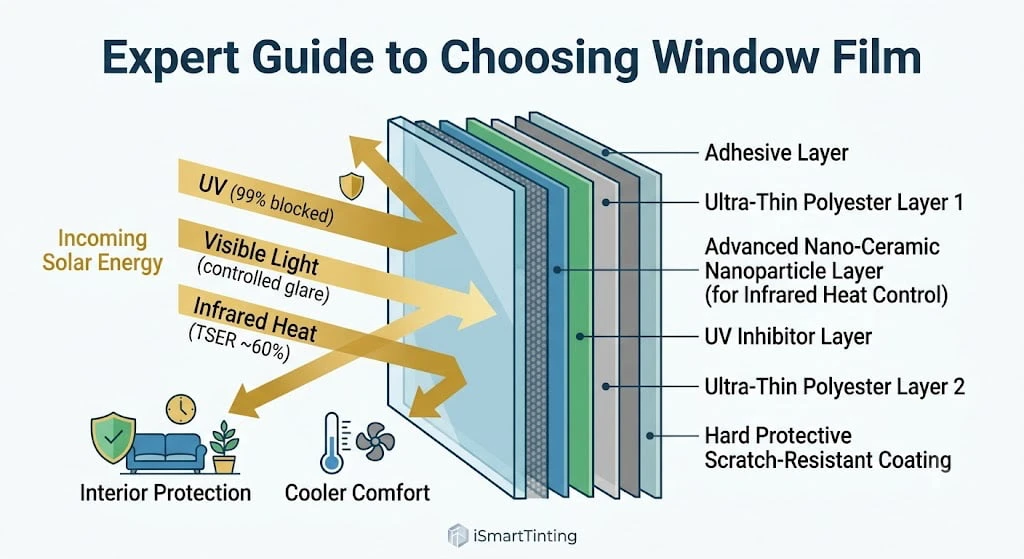
Ceramic window tint film is widely considered the top-tier option for both homes and offices. It uses nano-ceramic technology, which means tiny ceramic particles are embedded in the film to block heat and UV rays without relying on metal layers. This matters because metal-based films can interfere with Wi-Fi, cell signals, and GPS, while ceramic films do not.
According to window film industry standards, ceramic films with a Total Solar Energy Rejected (TSER) rating of 50% or higher are considered high-performance for residential use. In practical terms, that means noticeably cooler rooms during Toronto summers without blocking your view or dimming your space significantly. For large glass surfaces like floor-to-ceiling windows or open-plan office facades, ceramic film is hard to beat.
The upfront cost is higher than other film types, but the long-term savings on cooling costs and the film's resistance to fading make it a smart investment. If you want a closer look at what makes this technology stand out, our full breakdown of nano-ceramic window tint covers the details.
Carbon Window Tint Film
Carbon window tint film is a strong middle-ground option that offers solid performance at a more accessible price point. It has a distinctive matte finish that looks clean and professional, making it a popular choice for homeowners who want a modern look without the premium cost of ceramic.
In terms of heat rejection, carbon film performs well, blocking a significant portion of infrared radiation. It does not fade to purple over time the way older dyed films do, and it holds up well against temperature changes. For office managers working within a tighter budget or homeowners tinting multiple rooms at once, carbon film delivers real value without cutting too many corners on performance.
While it does not reach the heat rejection levels of ceramic, it is a durable and cost-effective solution that many GTA properties use successfully year-round.

Solar Bronze and Silver Reflective Films
Solar bronze and silver reflective films each serve a specific purpose, and the right one depends on what you are trying to achieve aesthetically and functionally.
Solar bronze window film offers a warm, amber-toned appearance that complements brick exteriors, wooden frames, and properties where a softer look is preferred. It reduces glare and rejects a solid amount of heat while giving the building a cohesive, polished appearance from the outside. It is a popular choice for residential properties where curb appeal matters as much as comfort.
Silver reflective mirror film takes a different approach. It creates a one-way mirror effect during daylight hours, making it nearly impossible for people outside to see in. This makes it a go-to option for ground-floor offices, street-facing commercial properties, and any space where maximum privacy during business hours is a priority. It also delivers strong solar rejection, which helps with energy efficiency in high-sun environments.
Frosted and Decorative Films
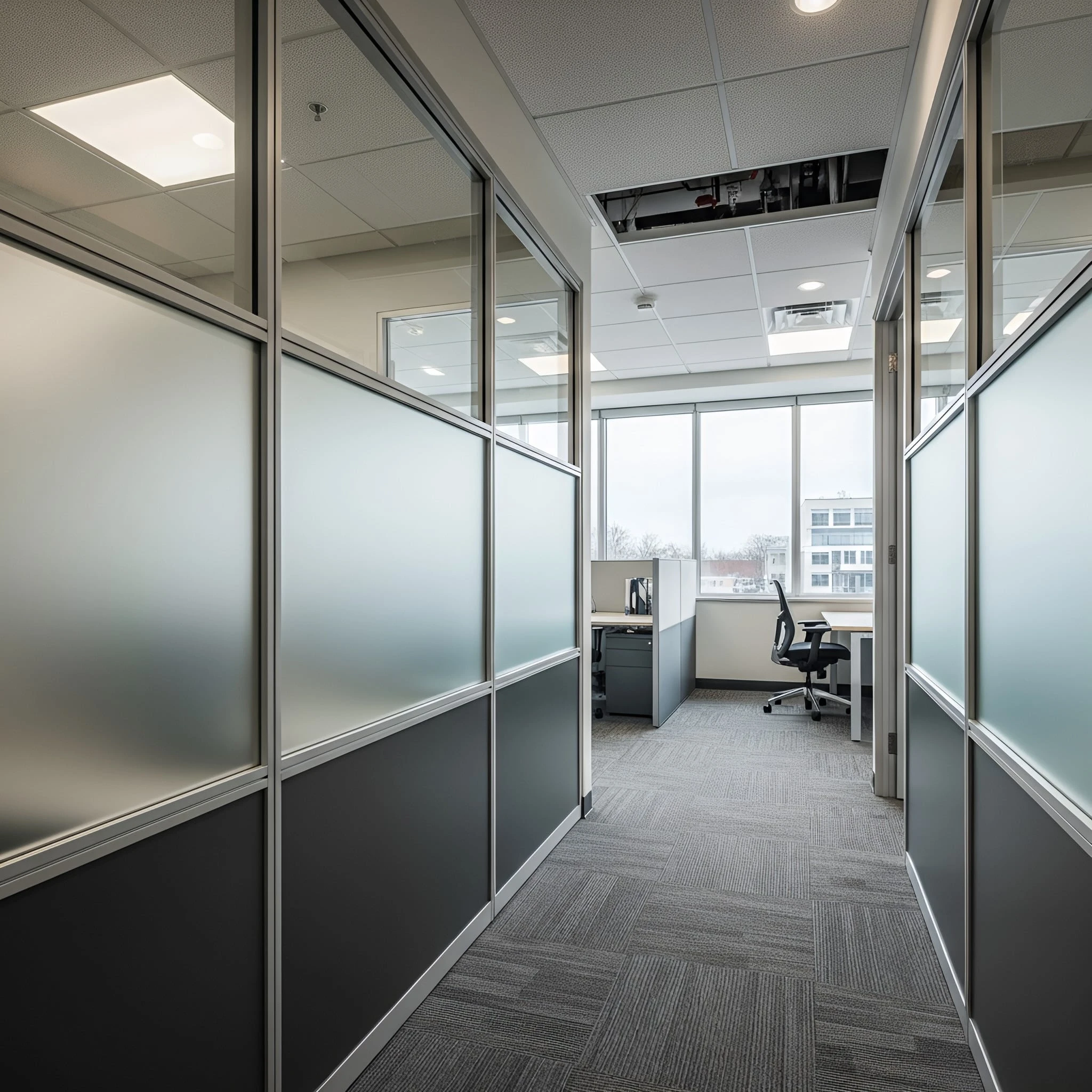
Frosted window film is the go-to choice when privacy is the goal but you still want natural light to pass through. It creates a soft, diffused appearance on the glass that works well for bathroom windows, glass office partitions, conference rooms, and retail storefronts. The look is clean, modern, and professional.
Compared to curtains or blinds, frosted film requires almost no maintenance. There is nothing to wash, adjust, or replace every few years. It stays fixed to the glass, holds its appearance over time, and does not collect dust the way fabric window treatments do. For a full comparison of frosted film versus traditional privacy solutions, see our guide on frosted film for privacy.
Decorative variants go beyond plain frosting, with cut patterns, gradients, and custom branding options that work especially well for commercial spaces.
How Do You Match Film Type to Your Specific Needs?
The best way to pick the right film is to start with your primary goal. Are you trying to keep a room cooler? Protect furniture from fading? Stop people from seeing into your office? Cut your energy bill? Each goal points toward a different film type, and some films serve multiple goals at once.
Here is a simple comparison of the main film types across the key factors most homeowners and office managers care about:
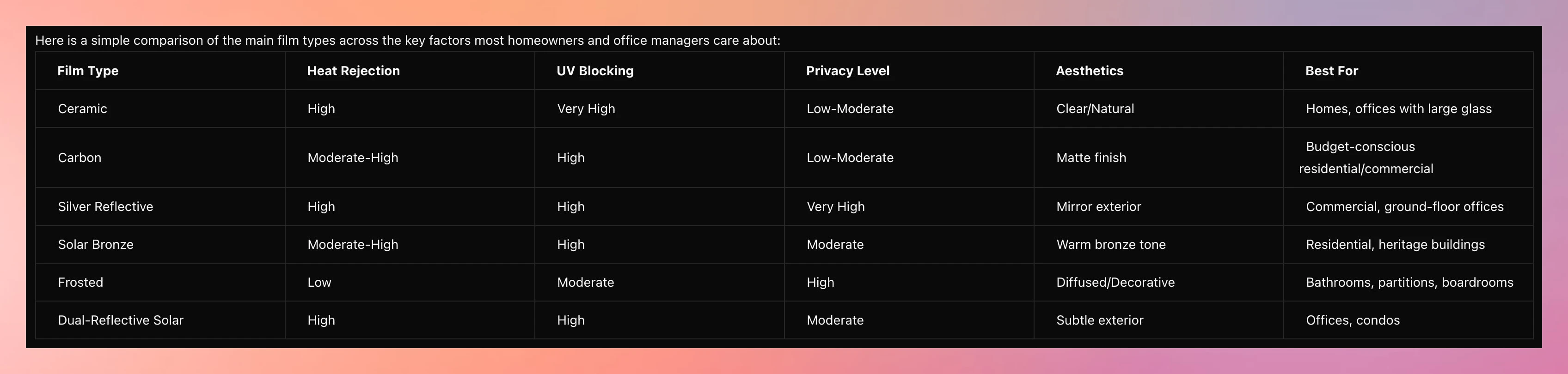
If you are still unsure which direction fits your property, iSmartTinting offers consultations for GTA residents and businesses. A quick conversation with the team can narrow down the options based on your window orientation, building type, and specific comfort goals.
Choosing Window Film for Residential Properties
For homes, the most common priorities are heat reduction in south and west-facing rooms, UV protection for furniture and flooring, and privacy for street-level windows. A living room that gets direct afternoon sun needs a higher heat-rejecting film than a north-facing bedroom that rarely sees direct light.
UV protection is often underestimated by homeowners until they notice faded hardwood floors or discolored upholstery. A quality window film blocks up to 99% of UV rays, which is one of the leading causes of interior fading. This alone can extend the life of your furniture, carpets, and artwork significantly.
For sunrooms and rooms with large glass panels, ceramic film tends to be the most practical choice. For bedrooms and bathrooms, frosted or carbon films often hit the right balance between comfort and cost. To explore installation options for your home, check out residential window tinting in the Greater Toronto Area.
Choosing Window Film for Commercial and Office Spaces
Offices have a different set of priorities. Glare on computer screens is a productivity issue that affects employees every day. A room that gets too hot by mid-afternoon forces people to work in uncomfortable conditions, which adds up over time. These are practical problems that the right window film can solve without major construction.
Energy efficiency is another major factor in commercial settings. Reducing the cooling load on a large office floor can lead to meaningful savings on utility bills month over month. This is part of why maximizing office ROI with window tinting has become a real conversation in modern office management. In many cases, smart window film is replacing far more expensive smart glass installations because it delivers comparable results at a fraction of the cost.
For office managers ready to act, office window tinting in the Greater Toronto Area covers the full range of commercial film options and installation details.
Does Climate Affect Which Window Tint Film You Should Choose?
Yes, and for GTA properties, this is an important consideration. Toronto, Brampton, and Mississauga experience both intense summer heat and cold, grey winters. A film that only performs well in hot weather is a partial solution at best.
Ceramic and carbon films both perform well year-round. In summer, they reject solar heat and reduce cooling costs. In winter, they add a thin layer of insulation to the glass, helping to retain warmth. This makes them suitable for the full range of weather the GTA delivers. If you are wondering whether window tinting is worth it during the colder months, the guide on window tinting in Canadian winters addresses that question directly.
Reflective films, on the other hand, are primarily heat-rejection tools and are better suited for buildings that see significant sun exposure throughout the year. For properties with heavy shade or north-facing facades, frosted or decorative films may be a more practical investment since heat rejection is less of a concern.
What Are the Key Performance Factors to Compare?
When you look at window film product specs, a few numbers matter more than anything else. Understanding what they mean helps you compare options on an equal footing.
VLT (Visible Light Transmission) refers to how much visible light passes through the film. A higher VLT means a lighter film that lets in more natural light. A lower VLT means a darker film that blocks more light. For offices where employees need to see screens clearly, a higher VLT is usually better. For bedrooms or south-facing windows where glare is a problem, a lower VLT may be preferred.
TSER (Total Solar Energy Rejected) is the overall measure of how much solar energy a film blocks, including heat, UV, and visible light combined. A TSER of 40% to 60% is considered solid performance for residential use, and anything above 60% is considered high-performance. Ceramic films tend to score highest here.
UV Rejection is typically listed as a percentage. Most quality films reject 99% of UV rays, which is the threshold you should look for if protecting interior surfaces matters to you.
Glare Reduction is measured as the percentage of visible glare the film cuts. For office environments, a glare reduction rating of 60% or higher makes a noticeable difference on screen-heavy workstations.
When comparing films, ask your installer to share the full spec sheet for each product so you can line up these numbers side by side. iSmartTinting provides transparent product information and walks clients through what the numbers mean for their specific space.
How Much Does Window Tint Film Installation Cost in the GTA?
Window film installation costs in the Greater Toronto Area vary based on film type, window size, the number of windows being treated, and the complexity of the installation. Ceramic films generally cost more than carbon or bronze options because of the advanced technology involved. Commercial installations on large glass facades will naturally cost more than a single-room residential job.
As a general rule, you get what you pay for in this industry. Be cautious of heavily discounted offers that promise professional results at rock-bottom prices. These deals often come with hidden fees, inferior film products, or installation shortcuts that show up as bubbles or peeling within a year or two. Our breakdown of the hidden costs of $99 window tint specials is worth reading before you commit to any quote.
iSmartTinting offers competitive pricing across the GTA with no hidden fees, industry-leading warranties, and the kind of craftsmanship that holds up over the long term. The goal is not to be the cheapest option on the market, but to be the one you do not regret choosing six months down the road.
Why Choose iSmartTinting for Window Film in Brampton, Toronto, and Mississauga?
iSmartTinting serves homeowners and businesses across Brampton, Toronto, Mississauga, and the broader Greater Toronto Area with a focus on quality, speed, and honest service. Same-day installations are available for clients who cannot afford to wait, and the team brings experience across both residential and commercial projects of all sizes.
Every installation is backed by industry-leading warranties, so if something goes wrong with the film, you are covered. The products used meet professional-grade standards, and the team takes the time to recommend the right film for each property rather than pushing one-size-fits-all solutions.
Hearing from past clients is always a good starting point if you are on the fence. Reading through customer reviews gives you a real sense of what working with iSmartTinting looks like from start to finish. When you are ready to move forward, book your window tinting consultation and get expert advice specific to your home or office.
Frequently Asked Questions
What is the best window tint film for reducing heat in a home?
Ceramic window tint film is the top choice for heat reduction in residential settings. It offers the highest TSER ratings available, often blocking 50% to 70% of total solar energy, and does not interfere with Wi-Fi or electronic signals inside the home.
Is ceramic window film worth the extra cost compared to carbon film?
For homes or offices with large sun-exposed windows, ceramic film is worth the investment. It outperforms carbon film in heat rejection and UV blocking, and it tends to last longer without fading. Carbon film is a solid choice when budget is the main constraint.
Can I use the same type of window film for both my home and office?
Yes, many film types work well in both settings. Ceramic and carbon films are commonly used across residential and commercial properties. The specific shade and VLT level may differ based on your privacy and light preferences in each space.
How long does window tint film last on residential and commercial windows?
A professionally installed, high-quality window film typically lasts 10 to 20 years depending on the film type, sun exposure, and climate. Ceramic films tend to have the longest lifespan. iSmartTinting backs its installations with warranties so you have coverage if issues arise.
Will window tint film affect the natural light coming into my space?
Window film does reduce some natural light depending on the VLT level selected. A lighter film with a higher VLT, such as 70% or above, lets in most of the natural light while still blocking heat and UV rays. Darker films reduce light more noticeably and are better suited for high-glare environments.
Does window film work in cold Canadian winters, or is it only useful in summer?
Window film works year-round. In winter, it acts as an additional insulating layer on the glass, helping to retain indoor warmth. In summer, it blocks solar heat from entering. For the GTA's climate specifically, ceramic and carbon films deliver benefits across all four seasons.
How do I know which VLT level is right for my property?
Start by thinking about how much natural light you want in the space and whether glare is currently a problem. South and west-facing windows typically benefit from a lower VLT film. North-facing rooms or spaces where light is already limited do better with a higher VLT. An iSmartTinting consultant can walk you through the right range for your specific windows and goals.